
How to see a doctor in Korea as a foreigner: a plain-English guide
Korean healthcare is fast and accessible once you know how the pieces fit. This guide explains the system, step by step, for people who did not grow up with it.
3F, 162 Apgujeong-ro, Gangnam-gu
Apgujeong Station (Line 3), Exit 5 · 1 min walk
To see a doctor in Korea as a foreigner, start at a local clinic (의원) for everyday illness; no referral is needed. Bring your ARC or passport, see the doctor, then fill prescriptions at a separate pharmacy. Use hospitals for specialist or emergency care and call 119 for emergencies. VEI Clinic in Apgujeong, Gangnam offers consultations in English.
How to see a doctor in Korea as a foreigner: the basics
If you are wondering how to see a doctor in Korea as a foreigner, the short answer is that it is usually quick and does not require a family doctor or referral for a first visit. Korea's system is built around many small, doctor-run clinics in every neighborhood, backed by larger hospitals for specialist and emergency care.
Most people simply walk into a clinic, register at the front desk, wait a short time and see the doctor. Booking ahead by phone or message is increasingly common, especially at clinics that see foreign patients. The main hurdles for foreigners are language and knowing which kind of facility to choose.
Opening hours vary. Many clinics close for an hour at lunch, open on Saturday mornings or afternoons and close on Sundays and public holidays. Checking a clinic's hours on a Korean map app, or messaging ahead, avoids a wasted trip.
Clinic (의원) vs hospital (병원): which to choose
Korean medical facilities are grouped by size. Knowing the difference saves time and money.
- 의원 (clinic): a local doctor's office, often run by one specialist. Suited to colds, infections, stomach problems, chronic conditions, checkups and vaccinations
- 병원 (hospital): a mid-sized facility with several departments and inpatient beds
- 종합병원 and university hospitals: large general and teaching hospitals for complex conditions, surgery and major emergencies. For outpatient specialist visits at the largest hospitals, a referral letter from a clinic is generally needed to receive insurance coverage at the usual rate
- Emergency rooms (응급실): found at hospitals, open 24 hours
Prescriptions and pharmacies
Korea separates prescribing from dispensing. The clinic doctor writes a prescription, and you take it to a pharmacy (약국), usually located in the same building or next door. You pay the pharmacy separately. Pharmacists can often explain basic instructions, but it helps if your doctor has already told you what each medicine is for.
Many medicines that are sold over the counter elsewhere require a prescription in Korea, and some foreign brand names are different here. Bring the packaging or the generic name of any medicine you take regularly.
Pharmacies can also sell many basic over-the-counter remedies, such as simple pain relievers and cold medicines, without a prescription. If you are unsure whether you need to see a doctor at all, a pharmacist is a reasonable first person to ask.
Costs, insurance and your ARC
Foreigners registered in Korea receive an Alien Registration Card (ARC), now officially called a residence card. If you are enrolled in the National Health Insurance Service (NHIS), show your ARC at registration and covered services are billed at the insured rate, with you paying a share. Some services, such as many IV treatments, weight-loss programs and cosmetic procedures, are non-covered and paid in full.
If you are not insured, for example as a tourist or a new arrival, you can still be seen; you simply pay the full fee. Clinic visits for common illnesses are generally modest in cost by international standards, while hospital tests and emergency care can cost much more. Travelers should keep receipts and medical documents for their travel insurance.
Emergencies and useful numbers
Call 119 for an ambulance, fire or medical emergency. 119 can connect you with interpretation if you do not speak Korean. Go to an emergency room or call 119 for chest pain, breathing difficulty, stroke symptoms, seizures, severe bleeding, serious injuries, severe allergic reactions or sudden severe abdominal pain or headache.
1339 is the Korea Disease Control and Prevention Agency call center, used for questions about infectious diseases, such as symptoms after overseas travel. It is not an ambulance line. For general help in English, the Korea Travel Hotline (1330) can assist visitors with information and interpretation.
Where VEI Clinic fits in
VEI Clinic (베이의원) is a 의원 in Apgujeong, Gangnam, one minute from Apgujeong Station Exit 5. Dr. HyunSung Park, a board-certified internal medicine specialist, sees patients 1:1 in English for primary care, internal medicine, checkups, lab tests, vaccinations, IV therapy and medical weight loss. We do not offer emergency care, surgery or endoscopy, but we can refer you to a hospital and explain what to expect there.
How it works
Choose a clinic
For non-emergency problems, pick a local 의원; message ahead if you need English.
Register with ID
Show your ARC if you have national insurance, or your passport if not.
See the doctor
Describe your symptoms; the doctor examines you and may order tests.
Pay and visit the pharmacy
Pay at the clinic, then fill any prescription at a nearby 약국.
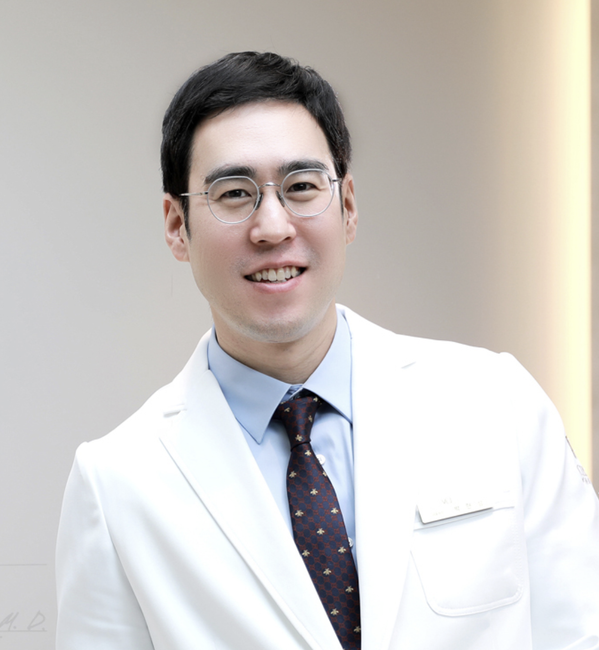
Dr. HyunSung Park
Medical Director · Internal Medicine Specialist · Consults in English & Korean
- Board-certified in internal medicine
- Gastroenterology subspecialist
- ECFMG certified (U.S.)
- Graduate, State University of New York
- Former Clinical Professor, Dongguk Univ. Ilsan Hospital
- Treating patients in Korea since 2010
Related care
Common questions
How do I see a doctor in Korea as a foreigner for the first time?
Go to a local clinic (의원), ideally one where the doctor speaks English, and bring your ARC or passport. No referral is needed. Messaging ahead lets you confirm the clinic can help and reduces waiting.
Do I need a referral to see a specialist in Korea?
Not for most clinics, which are often run by specialists. The largest general and university hospitals generally expect a referral letter from a clinic for insured outpatient visits; without one, you may pay more.
Can I see a doctor before I get my ARC?
Yes. Clinics see patients without an ARC; you use your passport and pay as an uninsured patient. Once you are enrolled in national insurance, covered services are billed at the insured rate.
Why does the pharmacy charge me separately?
Korea separates prescribing and dispensing, so clinics write prescriptions and independent pharmacies fill them. You pay each one for its own part. Keep both receipts if you plan to claim from insurance.
What number do I call in an emergency in Korea?
Call 119 for ambulance and medical emergencies; interpretation support is available. 1339 is the disease control agency's call center for infectious disease questions, not an ambulance service.
Are clinics open on weekends?
Many clinics open on Saturday mornings or into the afternoon, and some close one weekday. VEI Clinic opens Saturday 10:00 to 16:00 and closes Wednesday and Sunday. Hospital emergency rooms are open 24 hours.
This page is general information reviewed by a physician and is not a substitute for a personal consultation. Treatment suitability, benefits and risks differ for each person and are discussed with you before any care. In an emergency in Korea, call 119.
Questions about how to see a doctor in korea as a foreigner? Ask us.
Send a message and we'll reply on WhatsApp in English, usually the same day. WhatsApp: +82-10-5700-7597