
Thyroid nodule in Seoul: what it means and what comes next
Thyroid nodules are very common and most are benign. The right next step depends on what the nodule looks like on ultrasound.
3F, 162 Apgujeong-ro, Gangnam-gu
Apgujeong Station (Line 3), Exit 5 · 1 min walk
If a thyroid nodule was found, VEI Clinic in Apgujeong, Gangnam, can help you evaluate a thyroid nodule in Seoul. Dr. HyunSung Park, a board-certified internist, performs a thyroid ultrasound, grades the nodule using TI-RADS, checks TSH, and explains in English whether it needs monitoring or a hospital referral for fine-needle aspiration (FNA) biopsy.
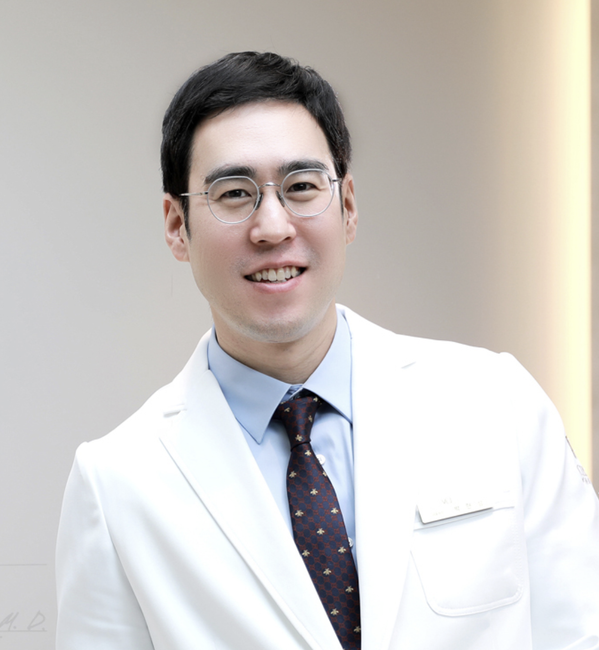
Thyroid nodule in Seoul: a common checkup finding
A thyroid nodule is a lump within the thyroid gland, at the front of the neck. Nodules are extremely common: ultrasound studies find them in a large proportion of adults, more often in women and with age. In Korea, where neck ultrasound is often included in health checkups, many people learn about a thyroid nodule in Seoul without having any symptoms.
The vast majority, around 90–95%, are benign. The task is to identify the small number that need a biopsy, while sparing everyone else unnecessary procedures and worry. Korea is well known in medical literature for a past surge in detection of tiny thyroid cancers, which has led to more cautious, criteria-based biopsy decisions.
Ultrasound and TI-RADS: how risk is graded
Thyroid ultrasound is the key test. Dr. Park looks at each nodule's size and features, then classifies it with a risk system. Korean doctors commonly use K-TIRADS, and international guidelines use similar systems such as ACR TI-RADS.
- Reassuring features: purely cystic (fluid-filled) or spongiform appearance.
- Suspicious features: solid and markedly hypoechoic (darker than surrounding tissue), irregular or spiculated margins, microcalcifications, or taller-than-wide shape.
- Size thresholds: whether a biopsy is advised depends on the risk category and the nodule size; low-risk nodules often need only monitoring.
- Lymph nodes: abnormal neck lymph nodes change the plan and may need biopsy themselves.
TSH and other blood tests
Every nodule workup should include TSH. If TSH is low, the nodule may be overactive ("hot") and producing hormone. Hot nodules are almost always benign and are evaluated with a thyroid scan rather than a biopsy, which we can arrange by hospital referral.
Free T4 and thyroid antibodies may be added, particularly if TSH is abnormal or Hashimoto's thyroiditis is suspected, as it can change how the gland looks on ultrasound.
Biopsy referral and follow-up
When a nodule meets the criteria, the next step is a fine-needle aspiration (FNA) biopsy. This is done under ultrasound guidance with a thin needle and results are reported using the Bethesda system. VEI Clinic does not perform the biopsy; we can refer you to a hospital and help you understand the result afterward.
Nodules that do not need biopsy are typically rechecked by ultrasound at intervals based on their risk category, often after one to two years for low-risk lesions. Growth or new suspicious features prompt reassessment. Very small, low-risk cancers are sometimes managed by active surveillance in Korea and Japan, a decision for specialist care.
Who should not panic, and who needs more than ultrasound
If your nodule is small, cystic or spongiform, or classified as low risk, monitoring is usually all that is needed, and you can live normally in the meantime. Nodules do not generally cause tiredness or weight change unless thyroid hormone levels are abnormal. Many people carry benign nodules for decades without any problem.
More than ultrasound is needed when a nodule meets biopsy criteria, when there are suspicious lymph nodes, when TSH is low and a thyroid scan is required, or when a large nodule or goiter causes pressure, swallowing difficulty or breathing symptoms. Pregnancy can change the timing of some tests, and radioactive scans are avoided during pregnancy and breastfeeding. In these situations, we can refer you to a hospital endocrine or thyroid surgery team and stay involved in explaining your results.
If you had a thyroid nodule evaluated abroad, bring the report and images if possible. Comparing size and features over time is often the single most useful piece of information.
Who should be seen sooner, and red flags
Seek prompt evaluation if a neck lump is growing quickly, feels hard or fixed, or comes with persistent hoarseness, difficulty swallowing, or enlarged lymph nodes. A history of radiation to the head or neck in childhood, or a family history of thyroid cancer or related syndromes, also raises priority.
Go to an ER or call 119 in Korea if you have trouble breathing or noisy breathing, sudden painful swelling of the neck (which can happen with bleeding into a nodule), or inability to swallow saliva.
How it works
Bring prior reports
Previous ultrasound images or checkup results help compare over time.
Thyroid ultrasound
Dr. Park examines the gland and neck lymph nodes.
TSH and grading
Blood test plus TI-RADS category for each nodule.
Plan
Monitoring schedule or a hospital referral for FNA biopsy.
Dr. HyunSung Park
Medical Director · Internal Medicine Specialist · Consults in English & Korean
- Board-certified in internal medicine
- Gastroenterology subspecialist
- ECFMG certified (U.S.)
- Graduate, State University of New York
- Former Clinical Professor, Dongguk Univ. Ilsan Hospital
- Treating patients in Korea since 2010
Related care
Common questions
Is a thyroid nodule cancer?
Usually not. Most thyroid nodules are benign. Ultrasound features and size determine whether a biopsy is recommended to rule out cancer.
Where can I get a thyroid nodule in Seoul checked in English?
At VEI Clinic in Apgujeong, Dr. HyunSung Park performs thyroid ultrasound and explains results in English. If a biopsy is needed, we can refer you to a hospital and review the results with you.
What does TI-RADS 3 or 4 mean?
These are risk categories based on ultrasound features. Category 3 is generally low suspicion and category 4 intermediate, but numbering differs between K-TIRADS and ACR TI-RADS, so the size threshold for biopsy depends on the system used. We explain your specific report.
Does a thyroid nodule affect my hormone levels?
Most nodules do not. Some overactive nodules produce extra hormone and lower TSH. That is why TSH is checked in every case.
Can a thyroid nodule go away?
Cystic nodules sometimes shrink or disappear. Solid benign nodules usually stay stable or grow slowly. Follow-up ultrasound tracks any change. Rapid growth, or growth together with new suspicious features, is a reason to reassess sooner.
Do I need surgery?
Most people with nodules never need surgery. Surgery is considered for confirmed or suspected cancer, large nodules causing pressure symptoms, or some overactive nodules. These decisions are made with a hospital specialist.
This page is general information reviewed by a physician and is not a substitute for a personal consultation. Treatment suitability, benefits and risks differ for each person and are discussed with you before any care. In an emergency in Korea, call 119.
Questions about thyroid nodule seoul? Ask us.
Send a message and we'll reply on WhatsApp in English, usually the same day. WhatsApp: +82-10-5700-7597