
Is stem cell therapy legal in Korea?
Korea allows regenerative medicine, but under specific rules. Knowing those rules helps you ask the right questions of any clinic, including ours.
3F, 162 Apgujeong-ro, Gangnam-gu
Apgujeong Station (Line 3), Exit 5 · 1 min walk
Is stem cell therapy legal in Korea? Yes, within a regulated framework: it is lawful when it uses a product approved by the Ministry of Food and Drug Safety, or is provided under the Advanced Regenerative Bio Act at a designated institution with an approved plan. VEI Clinic in Apgujeong, Gangnam, explains each option's status in consultation.
Is stem cell therapy legal in Korea? The short answer
Is stem cell therapy legal in Korea? Yes, when it follows the law, and no, when it does not. Korea is one of the countries that has built a formal legal framework for regenerative medicine, rather than leaving it unregulated. That framework sets out who may provide cell-based treatments, for which patients, and with what oversight.
This page is a general guide for patients, not legal advice. Regulations change and their detail matters, so we encourage you to verify the current position with official sources and to ask any provider for documents showing the approval behind a proposed treatment.
The Advanced Regenerative Bio Act
Korea's Act on the Safety of and Support for Advanced Regenerative Medicine and Advanced Biological Products, usually called the Advanced Regenerative Bio Act, regulates regenerative medicine, including cell therapies. For several years after it took effect in 2020, treatment under the Act was largely limited to approved clinical research.
An amendment that took effect in February 2025 widened this. It allows regenerative treatments to be provided to patients, not only research participants, at designated regenerative medical institutions, under treatment plans reviewed and approved through the official review process. The framework focuses on patients with serious, rare or hard-to-treat conditions, and approved plans come with safety monitoring and reporting duties.
In practice, this means the question is rarely simply whether stem cells are allowed. It is whether this particular treatment, at this particular institution, for this particular patient, sits within an approved pathway.
MFDS-approved cell therapy products
Separately, the Ministry of Food and Drug Safety (MFDS) approves cell therapy products in much the same way it approves medicines. A number of cell therapy products, including some stem cell-based products, have been approved in Korea for specific indications. Approval applies to that product, for that indication, used as directed. It does not make every stem cell treatment lawful or proven for other uses.
If a clinic names an approved product, you can ask what indication it is approved for and whether your condition matches it.
Approved products are typically used in hospital settings for the conditions they were approved for, under the prescribing rules that come with approval. A wellness or anti-aging use outside those indications is a different matter and should be discussed openly.
Questions to ask any clinic
A legitimate provider should answer clearly and in writing. If the answers are vague, take that as a warning sign.
Useful official starting points include the Ministry of Food and Drug Safety for approved products and the Ministry of Health and Welfare for the regenerative medicine framework. If you are unsure how to read a document, bring it to your consultation or ask your own specialist to look at it with you.
Remember too that the law in your home country may differ. If you plan to continue care or follow-up at home, check that your doctor there is willing to monitor you after a treatment received in Korea.
- Which legal pathway does this treatment use: an approved product, an approved plan under the Advanced Regenerative Bio Act, or something else?
- Is this clinic or its partner hospital a designated regenerative medical institution, if that is required?
- Can you show the approval or plan details in writing?
- Where are the cells processed, and is that facility licensed?
- What evidence supports this treatment for my specific condition, and what are the known risks?
- How will side effects be monitored and reported after treatment?
Limits, risks and when to say no
Legal status is not the same as proof of benefit. Many uses of stem cells remain experimental, and results vary between individuals. Risks include infection, injection-site pain, immune reactions and, with unregulated or poorly processed products, serious complications. If you develop fever, spreading redness, severe pain or breathing difficulty after any procedure, seek urgent care; in Korea, call 119.
Be cautious of any treatment offered as a cure, marketed for many unrelated conditions, or provided without a clear explanation of its legal basis. Do not stop treatment prescribed by your specialist in favor of a stem cell procedure.
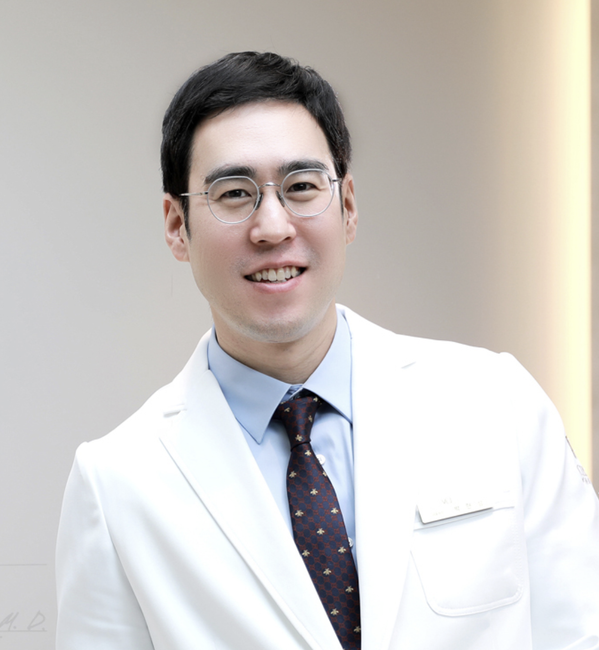
At VEI Clinic, stem cell programs are consultation-based. Dr. HyunSung Park, an internal medicine specialist and ISSCR member, assesses suitability individually and explains the regulatory status of any option discussed; he does not promise outcomes.
How it works
Share your situation
Send your diagnosis and records so the doctor understands your condition.
Consultation
Discuss the evidence, risks and the legal pathway that would apply, if any.
Verify status
Receive information on approval status so you can check it independently.
Decide without pressure
Take time to consult your own specialist before making any decision.
Dr. HyunSung Park
Medical Director · Internal Medicine Specialist · Consults in English & Korean
- Board-certified in internal medicine
- Gastroenterology subspecialist
- ECFMG certified (U.S.)
- Graduate, State University of New York
- Former Clinical Professor, Dongguk Univ. Ilsan Hospital
- Treating patients in Korea since 2010
Related care
Common questions
Is stem cell therapy legal in Korea for foreigners?
The same legal framework applies regardless of nationality. A treatment is lawful when it uses an approved product as directed or is provided under an approved plan at a designated institution. Eligibility rules for specific plans should be confirmed case by case.
What changed in Korea in 2025?
An amendment to the Advanced Regenerative Bio Act took effect in February 2025. It allows regenerative treatments, not only clinical research, at designated medical institutions under approved treatment plans, with ongoing safety oversight.
Does legal mean the treatment works?
No. Legal approval sets conditions for safety and oversight, but evidence of benefit varies widely by condition and product. Ask what published evidence exists for your situation.
How can I check a clinic's approval?
Ask for the approval or plan details in writing and check them against official Korean government sources, such as MFDS or the Ministry of Health and Welfare. You can also ask your home doctor to review the documents.
Are cosmetic stem cell treatments allowed?
Products and procedures vary, and marketing terms can be misleading. Ask exactly what is being injected, how it was processed, and which legal basis applies before agreeing to anything.
Does VEI Clinic offer stem cell therapy?
VEI Clinic offers consultation-based stem cell programs. The doctor assesses suitability individually, explains the legal status of any option, and does not make outcome promises.
This page is general information reviewed by a physician and is not a substitute for a personal consultation. Treatment suitability, benefits and risks differ for each person and are discussed with you before any care. In an emergency in Korea, call 119.
Questions about is stem cell therapy legal in korea? Ask us.
Send a message and we'll reply on WhatsApp in English, usually the same day. WhatsApp: +82-10-5700-7597